



- Home
- About
About
- Academics
acdemics
Faculties
-
Faculty of Arts and Commerce
- Department of Bengali
- Department of Commerce
- Department of English
- Department of Economics
- Department of Folklore
- Department of Hindi
- Department of History
- Department of Library & Information Science
- Department of Modern Language
- Department of Philosophy
- Department of Political Science
- Department of Rural Development Studies
- Department of Sanskrit
- Department of Sociology
- Department of Visual Arts
-
Faculty of Science
- Department of Biochemistry & Biophysics
- Department of Botany
- Department of Chemistry
- Department of Ecological Studies
- Department of Food & Nutrition
- Department of Environmental Science
- Department of Geography
- Department of Mathematics
- Department of Microbiology
- Department of Molecular Biology & Biotechnology
- Department of Physics
- Department of Physiology
- Department of Statistics
- Department of Zoology
- Faculty of Engineering Technology & Management
- Faculty of Education
- School of Interdisciplinary Studies
Academic Calendar
-
Faculty of Arts and Commerce
- Admission
Admission
- Administration
- Facilities
- Affiliated Colleges
Affiliated Colleges
- Centres
Centres
- Central Library
Central Library
- IQAC
- DODL
- Faculty
Faculty


Herbal Garden
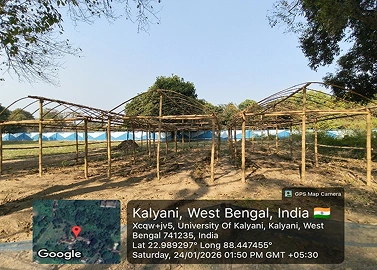
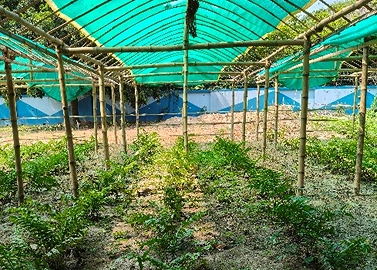
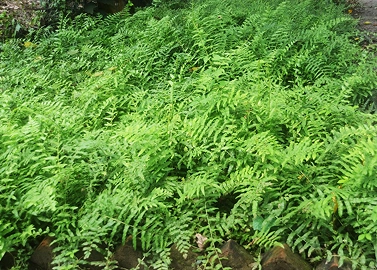
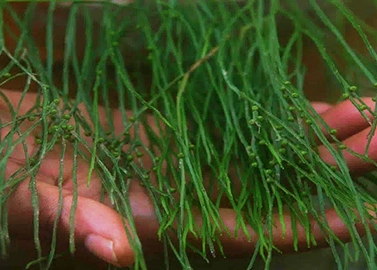
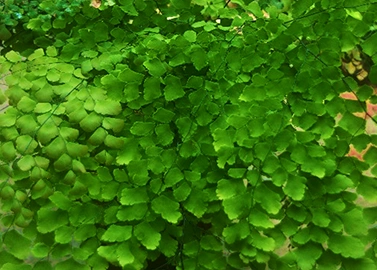
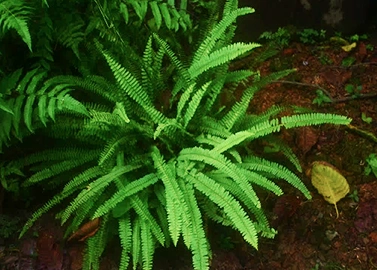
This fern garden project was initiated in September 2025 covering more than one hectare area near our department with the primary objective of conserving and promoting the diversity of pteridophytes. This project is raised with initial funding given by West Bengal Pollution control board. In addition, another objective was to popularize these beautiful plants among the researchers, younger students, amateur botanist and fern lovers. The garden serves as a living collection for the conservation and study of these important plant groups, while also creating awareness about their ecological significance. Pteridophytes have very attractive, uniquely designed leaves can give an aesthetic appeal in the visitor's eye.
At present, the garden contains approximately 50 species of pteridophytes belong to terrestrial, epiphytic and aquatic habitat of which some are common and some species are very rare (collected mainly from Darjeeling Himalayan and north-eastern Himalayan region during our filed visit). Special attention has been given to maintaining suitable microhabitats for the growth and survival of these plants. The ferns naturally occurring under the shade of large angiosperm trees. Tree species were carefully maintained in that plot. In addition, several trees were planted to provide adequate shade and help establish a cool, humid, and shaded microhabitat suitable for the growth of shade-loving pteridophytes.
Also, our garden has another major attraction like miniature bryophyte and large gymnosperm. The initiative was expanded to plant some bryophytes, serve as pollution indicator species and small plateaus are artificially created to provide them natural habitat. The garden contains a greenhouse for propagating and regrowing plant cultures.
Thus, the garden represents an ongoing effort toward plant conservation, biodiversity enhancement, and the development of a natural learning environment near the department. It provides valuable opportunities for students and researchers to observe these plant groups in a semi-natural setting and to understand their diversity, ecology, and importance in maintaining healthy ecosystems. Presently, ten species of bryophytes, eight species of gymnosperms and about fifty tree species belong to angiosperm are present inside garden area. My motto is to expand the gene pool in the said garden and to make it diversified collections from several places of India in near future.
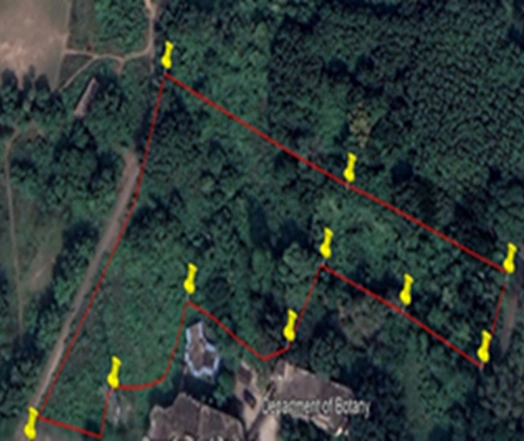
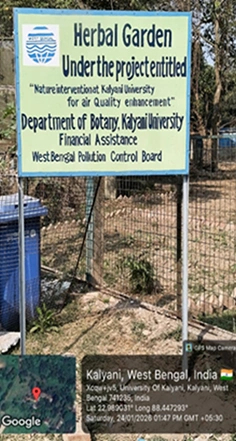
A brief description of the plants present in the garden is provided below. QR codes were provided for each plant to facilitate easy access to detailed information about their scientific names, characteristics, distribution, and ecological importance.
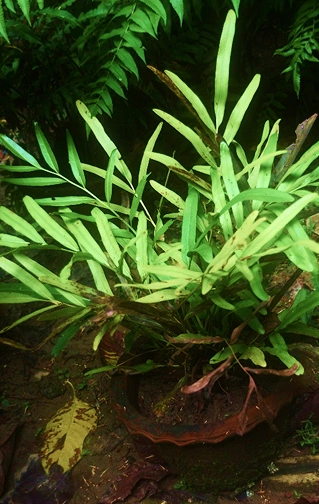
Acrostichum aureum L.
Known as mangrove associate found in Sundarban area, North 24-pargana, South 24-pargana, Kolkata. Grown in thicket and form small bush covered the entire region. Prefers open habitat.
Rhizome erect, stout stem 4-5 ft height, scales on rhizome and base of the stipe base thickened, frond about 5 ft long, leaves pinnate compound, entire, leathery, pinnae stalked, entire, fleshy, midrib grooved above and strongly raised below, basal few pinnae remain sterile, upper few pinnae pairs of leaves become fertile and undersurface of the leaves covered with reddish sori known as acrostichoid sori. Sporangia borne over the surface on and between the veins, interspersed with short capitate paraphyses, exindusiate.
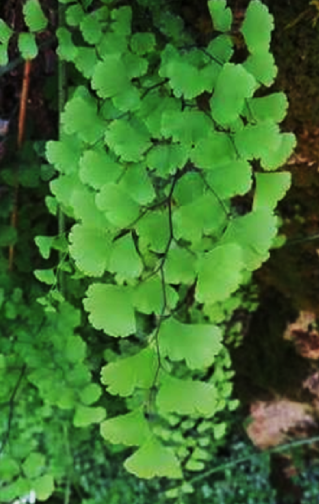
Adiantum capillus-veneris L.
Born on wall crevices prefer open habitats, form thicket, mostly seen in riverside districts of West Bengal such as Howrah, Hooghly, Nadia, and 24-parganas.
Plant height 10-30cm, rhizome long widely creeping, slender, scales linear-lanceolate, non-clathrate, tip acuminate, smooth-margined and golden brown, stipes black, scaly at the base, adaxially grooved, bipinnately compound leaves, basal pinnules the largest, pinna stalked, lower margin V-shaped, upper ones parallel to the lower one forming a smoothly curved blunt apex, upper margin dentate, venation open dichotomous, sori large, at the intramarginal position covered with the reflexed leaf margin, sporangia small and globular, sexual.
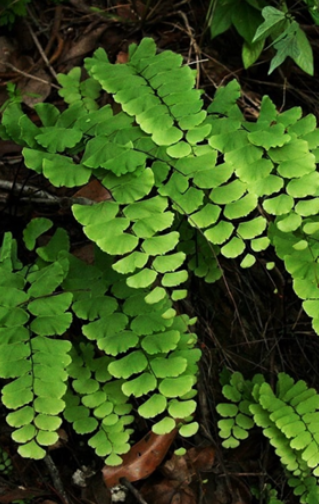
Adiantum lunulatum Burm.f.
Lithophyte, grown in the thicket, sometimes on the forest floor, grown in association with other ferns also. Commonly known as maidenhair fern.
Plants 10-15 cm in length, short creeping rhizome, covered with persistent leaf bases, rhizome and petiole base densely scaly, petiole and rachis black in color, leaves unipinnate, bearing 7-12 alternate pinnae, pinnae lunate, short stalk present, open dichotomous venation, sori linear, confluent or not, intramarginal, false indusium present, leaf margin enrolled to form indusium, sporangia stalked. Apogamous and sexual.
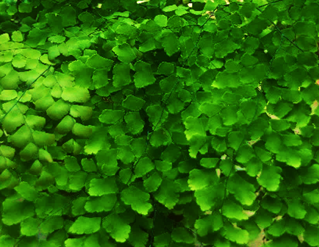
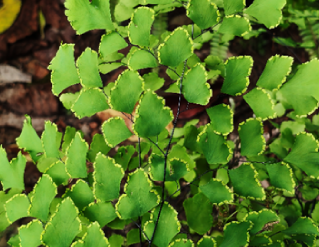
Adiantum raddianum C.Presl
Terrestrial, prefer moist shade mountainous areas.
Rhizome short-creeping, branched, 3-4 mm thick, covered by persistent crowded leaf bases and scales, scales lanceolate, margin entire, tip acicular, golden brown, stipes 15-25 cm long, 1-1.25 cm thick, glabrous, black with scaly base, sparsely hairy above, adaxially grooved, lamina 2-3 pinnate, 30-40 x 15-20 cm, deltoid, pinnules stalked, longer than broad, lower margin almost straight or slightly concave, herbaceous, outer margin smoothly curved with 3-5 sinuses, lower pinnules more or less symmetrical, stalk of the upper pinnules in line with lower margin, distal pinnules more or less acutely triangular with equal inner margins, sori 4-9 on the sinuses of outer margins, 1-3 per lobe, reniform, sporangial stalk as long as capsule, tetraploid, Sexual; triploid, apogamous; octaploid, aneuploid.
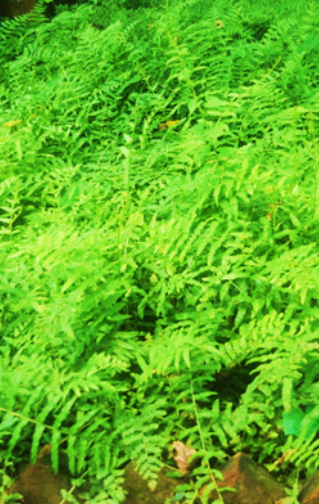
Ampelopteris prolifera (Retz.) Copel.
Grown well in both shade and open habitats, form thicket, mostly seen in riverside districts of West Bengal such as Howrah, Hooghly, Nadia, and 24-parganas, in Burdwan and Purulia very rare, helps to prevent soil erosion, may grow in association with other plants or can form thicket in isolated way.
Plant height 10-90cm, rhizome long widely creeping to short creeping depending on the habitat they occupy, slender, scales present, scales linear-lanceolate, smooth-margined and golden brown, stipes black, scaly at the base, uni-pinnately compound leaves, basal pinnules the largest, pinna sessile, acicular hairs on the lamina, rachis also have acicular, glandular and forked hairs, anastomosing veins, connected at the sinus, sori large, roundish, sexual, apical bud present through which it proliferates.
Edible, young croziers are consumed as leafy vegetables or famous in different local cuisine, known as 'dhenki shak' in several hills and plateaus of India.
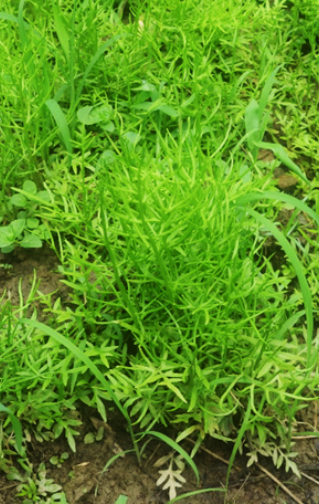
Ceratopteris thalictroides (L.) Brongn.
Semi-aquatic or marshy, annual plant, grown during rain after forming fertile leaf the aerial stem dies and perishes from the field, but the spores are buried in the soil and maintain a spore bank, from where a new plant body arises. Grow everywhere.
Stems erect, bearing a few scales, and usually few roots, abundant at the petiole base, fleshy, frond dimorphic, sterile frond lanceolate to ovate-lanceolate, shorter than fertile, bipinnate to quadripinnate, fertile fronds narrow, horn-like and rigid, resembling thick-needles, veins anastomosing without included veinlets, sporangia solitary, borne distantly on the veins, indusium well differentiated from the recurved margin. Sexual.
Edible in some places of Bengal, known as Pani-dhenki.
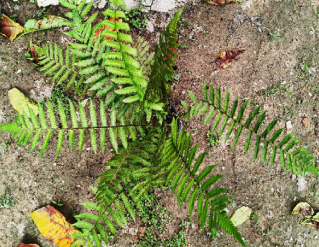
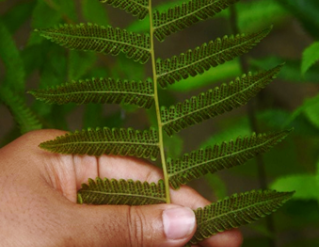
Christella dentata (Forssk.) Brownsey & Jermy(Syn: Thelypteris dentata (Forssk.) E.P.St.John)
Associated well with other plants and also grown in solitary patches. Grown in an open and shady habitat. Very adaptable to disturbance. Grow everywhere.
Plants up to 70cm in height, with short to long creeping rhizomes, rhizome covered with dense scale, stipes scaly at the base, polished, dark-brown when dry, distinct aerophores on either side of the groove, leaf lamina longer than stipe, rachis hairy, lamina pinnatifid, texture herbaceous, basal acroscopic segment enlarged, pinnae about 15-25 pairs below the pinnatifid apex, basal 1-4 pairs gradually reduced and widely spaced, opposite or sub-opposite, lanceolate acuminate at the apex, lobed half way or little more to the costa, lobes 10-20 pairs, rectangular or oblong, rounded-obtuse at the apex, veins up to 8-pairs, free, one and half pairs of basal veins anastomosing to form an excurrent vein reaching the base of the sinus, costa and costule hairy, hair acicular, sori superficial, placed along a specific zigzag fashion along the veins, circular indusium covered the sorus.
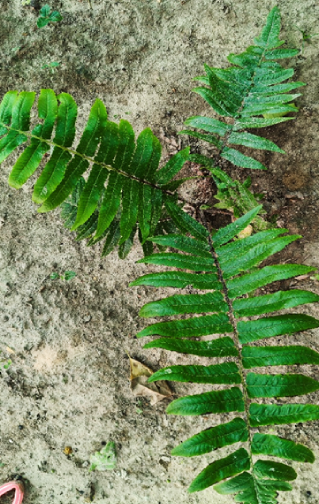
Diplazium esculentum (Retz.) Sw.
Prefers moist shady place for growth, grown in association with other weeds, through Gangetic Plains.
Rhizomes ascending, old rhizome very hard erect, rhizome scaly, scales with a wide base, stipes 30-60 cm long, tufted, scaly at the base, scale margin toothed, dark brown, leaves bi-tripinnate with simple pinnate apex, one m or long, and about half as wide, pinnae upto 7 pairs, lower pinnae 40-50 x15 cm, pinnules 5-10 x1-2 cm, lowest shortly stalked and rest sessile, base truncate to broadly cuneate, often auricled on one or both the sides at the base, margins crenate or shallowly lobed, apex acuminate, texture herbaceous, veins pinnate, 6-10 pairs per lobe, the lower 2-3 pairs of adjacent groups anastomosing forming an irregular excurrent vein to the sinus between the lobes, sori linear along the lateral veins and extending along nearly their whole length, basal acroscopic ones diplazoid, with linear membranous indusium, aerial part seen through the year.
Edible, consumed as leafy vegetables.
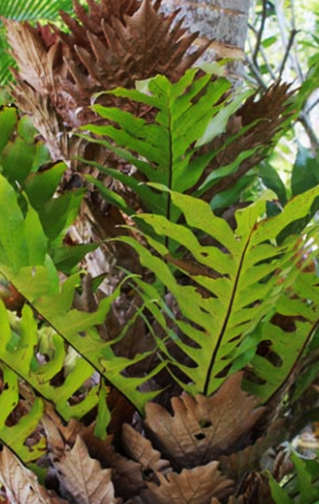
Drynaria quercifolia (L.) J.Sm.
Epiphytic, seen in very low height (a few feet) of the branches to higher branches (up to 50 ft).
Rhizome creeping, fleshy, covered with dense scales, scale long, base peltate, margin hairy, reddish-brown; lamina dimorphic, sterile leaves small, scaly sessile, obovate to cordate ovate, pale green when young and browny membranous at maturity, fertile leaves deeply pinnatifid, coriaceous, long persistent leaf bases left once the fertile leaves fall, stipes up to 30cm long, grooved above, edges of grooves winged, lamina about 100x40cm, lobes touch the midrib into elongated acuminate segments, base decurrent on the stipes, veins raised above and below, sori at the juncture of veins, cross veins form areole with included veinlets, exindusiate, sporangia stalked, round, spores hyaline. Sexual.
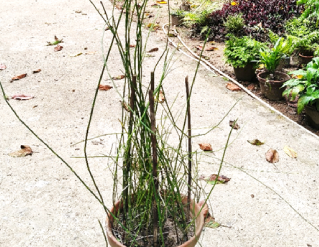
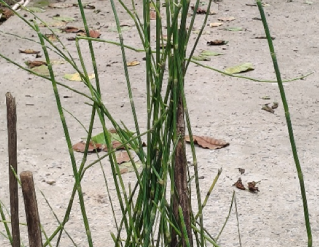
Equisetum ramosissimum Desf.
Terrestrial, lithophytes, grown luxuriantly in a moist microhabitat. Restricted only in Nadia.
Rhizome grown deeper from the surface, aerial stem 20-160 cm tall, 1-7mm dia, 2-3 branches per node, persisting throughout the year, sheath campanulate or funnel-shaped, branches lone slender, ribs 8-20, sheaths tight, 0.5 cm long including lanceolate, acuminate, dark-brown deciduous teeth, strobilus found, terminal in position, yellow to black, obtuse to apiculate, lower sheath brown with dark girdle, upper green rim of sheath white, sporangiophore orbicular to oblong, sporangia oblong, yellowish. Twenty-four ploid, Sexual.
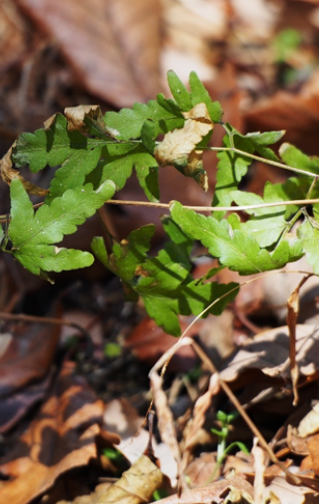
Lygodium japonicum (Thunb.) Sw.
Terrestrial climber, found in Hoogly, Howrah, Nadia, etc.
Rhizome long creeping, covered with black hairs, stipes scaly at base, glabrous above, abaxially flattened, apex acuminate, black, fronds wide-spreading, tripinnate, primary pinnae ca 7-10 cm apart with 2mm long common stalk forked once, primary branches clothed with pale-brown hairs; secondary branches ca 5-12 cm long opposite; pinnae ending in linear, elongated pinnules; pinnules 3-5 lobed, central lobe much elongated, pubescent at base, fertile pinnae much contracted giving an appearance of the dissected lamina, margin of pinnules crenate, texture herbaceous, primary rachis scabrous, secondary rachis ridged, primary blade divide pseudodichotomously with a dormant bud in the axils, veins distinct, 1-3 forked, free, sori finger-like, marginal-projections greenish when young and dark-brown at maturity, sporangia short-stalked, arranged in two-rows, tetraploid, sexual.
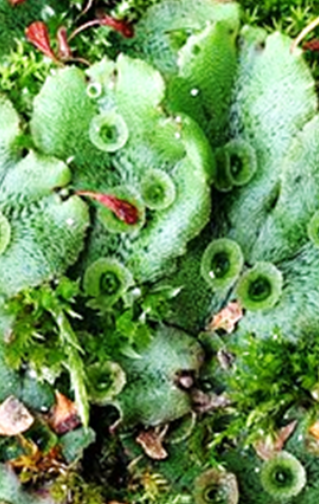
Marchantia polymorpha L.
Marchantia polymorpha is a common species of liverwort. It is a small, green, thalloid plant commonly found in moist, shady habitats.
The plant body is a dorsiventral, dichotomously branched thallus with rhizoids on its lower surface. It bears distinctive gemma cups, which help in asexual reproduction. Male and female reproductive structures occur on specialized stalks called antheridiophores and archegoniophores, respectively. The dominant and independent phase is the gametophyte, while the sporophyte remains attached to it.
Marchantia reproduces by vegetative, sexual, and asexual methods. Because of its simple structure and well-defined life cycle, Marchantia polymorpha is now been used as model plant of present-day researchers.
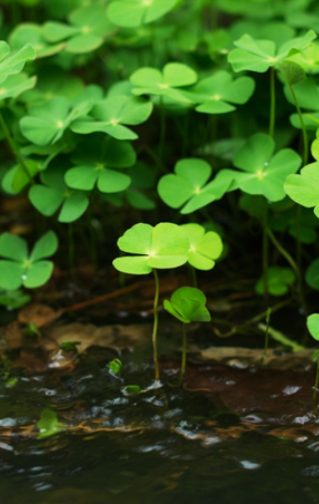
Marsilea minuta L.
Rooted aquatics, land and water form is seen, leaves of water form are much larger than the land forms. Very common to see these plants in the water bodies of West Bengal.
Slender creeping dichotomously branched rhizome of indefinite growth, nodes are distantly placed, at each node bear one or two adventitious roots and an upright leaf, Quadrifoliate leaves, leaflets entire or crenulate, at night the leaflets are folded upwards assuming a 'sleeping' position, profuse growth seen in vegetative stage, reproductive structure sporocarp bears both micro and megasporangia, sporocarp is a flattened bean-shaped structure borne on the base of the petiole. Sporocarp remains viable up to 35-40 yrs.
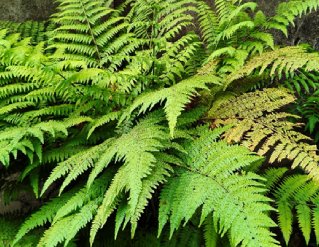
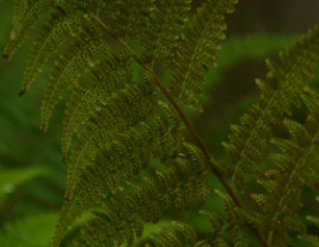
Microlepia speluncae (L.) T. Moore
Microlepia speluncae is a large, terrestrial perennial fern. It features soft, delicate fronds that often go limp soon after being picked, and it is widely distributed across wet tropical and subtropical regions. Thrives in moist, shaded conditions in evergreen forests, swamp forests, marshes, and damp shaded ravines.
Rhizome short or widely creeping, fleshy, 5-10 mm in diameter, and covered with pale or brownish hairs, stipe chestnut-brown to straw-colored, growing up to 1 meter long, and finely hairy near the base and apex, lamina (blade): broadly ovate to triangular, 0.4 to 2.6 meters long, and 3- to 4-pinnate, fronds yellow-green to green, membranous, with soft, minute hairs on both surfaces, sori: circular, about 1 mm wide, located at the vein ends near the margin, featuring a cup-shaped or saucer-shaped outward-facing indusium.
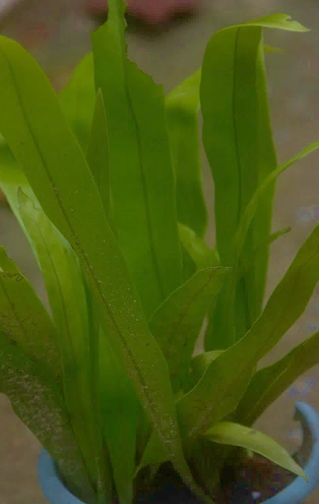
Microsorum punctatum (L.) Copel.
Epiphyte, seen in different tree heights, netted roots form a weblike structure containing organic debris, minerals, and water and provide a suitable microniche to the plant, found everywhere.
Rhizome short creeping, ca 1 cm thick, stout, ovate or ovate-lanceolate, acuminate, margin toothed, peltate, blackish-brown, each node bears a tuft of adventitious roots and a single leaf at the upper side, leaf simple, sessile, lanceolate or elliptic, apex blunt or acute, base decurrent, margin entire, midrib rounded below, grooved above, reticulate venation, veins visible but not prominent, form areole which includes small free forked veinlets with clavate apices, texture coriaceous, leaf lamina glabrous, sori numerous small round, irregularly scattered on the upper half of the frond, sporangia oval, short-stalked, diploid, sexual, tetraploid.
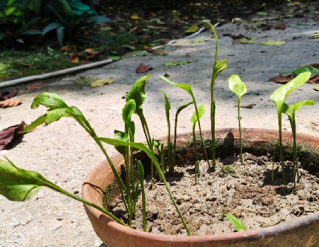
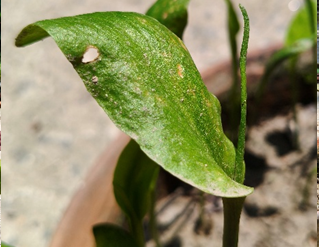
Ophioglossum petiolatum Hook.
Terrestrial, grown in swampy areas, found in Hooghly and Nadia
Plant height 10-15 cm, rhizome short erect, slender having many fleshy roots, fronds one or more arising during a single growing season, stipe common, 2-8 cm long but shorter than the fertile stipes, trophophyll sessile, ovate or ovate-lanceolate, base obtuse, veins forming large areoles with free included veinlets, fertile spike longer than the common stipe, strobilus/spike 1-4 cm long, aneuploid.
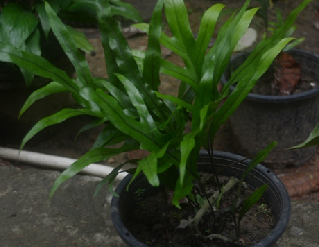
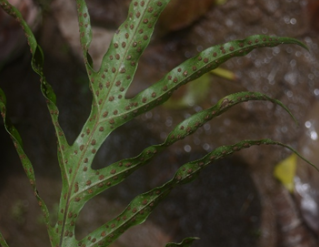
Phymatosorus lucidus (Roxb.) Pic.Serm.
Terrestrial, profusely grown in shorter periods.
Roots adventitious, hairy, rhizome long creeping, thick about 2cm in dia, densely covered by scales, scales linear-lanceolate, apex hair-tipped, acute spreading, stipes erect slender, hairy, pale-purplish, glossy, lamina simple pinnate, deltoid to ovate-lanceolate, with a terminal pinna similar to lateral ones, pinna numerous, lower ones opposite, the rest alternate, lower pinnae sessile or shortly stalked, superior ones more or less adnate or decurrent at the base, the lowest pair of pinnae reduced, largest pinnae oblanceolate, apex short acuminate, base subtruncate or cuneate, costa distinctly raised above and below, veins prominent, forming a large areole with included veinlets which bear sori, marginal veins ending in a thickened apex within the margin and free, texture firm, membranous, lamina pale-greenish, sori globose, small, superficial, at the tip of free veinlets in the costal areoles, light brown.
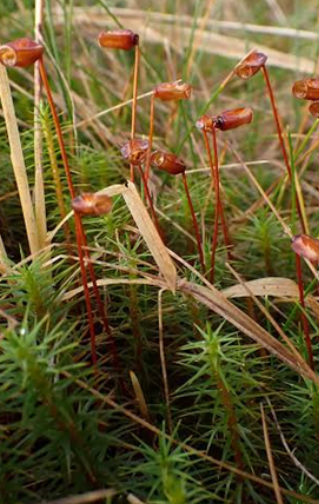
Polytrichum commune Hedw.
Commonly known as haircap moss or giant haircap moss, is a medium to large-sized perennial moss that forms extensive, tough green-to-brown tufts or mats. Thrives in damp, acidic soils, peat bogs, wet heaths, open woodlands, and forest water courses.
A cosmopolitan species found worldwide across diverse climates and regions.
Tufted plants with usually much branched tall stems, 10-20 cm height, brownish thickly covered with stiff erectopatent leaves (except the base), leaves linear-lanceolate upto 6-12 mm long with sharp toothed margins, wider sheathing base, upper leaf surfaces feature parallel photosynthetic ridges (lamellae) that help trap moisture and protect the plant, angular capsules sitting on a long, reddish stalk (seta), covered by a distinctive, hairy, whitish-to-brown hood (calyptra).
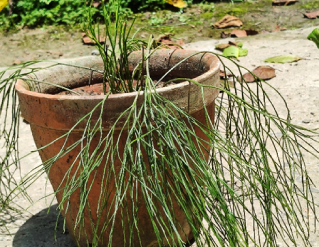
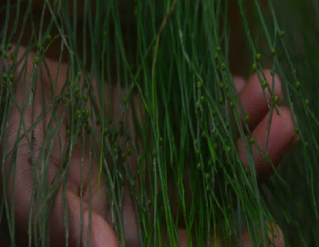
Psilotum nudum (L.) P.Beauv.
Epiphyte and terrestrial both
Plant height 20-25 cm, very simple body organization having a subterranean rhizome, dichotomously branched aerial axis, and numerous rhizoids at the underside, non-septate hyaline rhizoids, plant body lack roots, rhizoids act as absorptive organ, leaves absent, on aerial branches awl-shaped small appendages are present which are without any vascular trace and stomata, ultimate aerial branches bear large conspicuous sporangium, that is a trilocular structure and called also synangium, synangium inverted pear-shaped, subtended by two spine like enations.
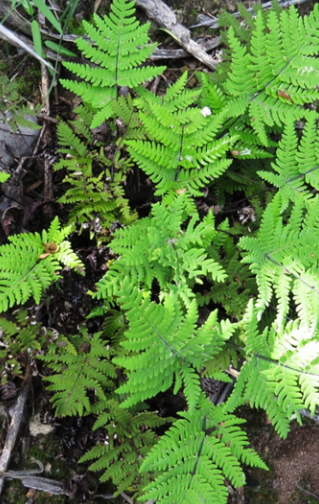
Pteris biaurita L.
Terrestrial, grown in shade as well as sun, grown in association with other plants, sometime form small thickets, reported from Hooghly.
Rhizome erect to suberect, scaly, scale at the apex, scales ovate-lanceolate, acuminate, entire, dark-brown, concolorous, stipe glabrous, scale near the base, 10-60 cm long, grooved on adaxial surface, lamina deeply bipinnatifid, herbaceous, lowest pinnae longest and bipartite on basicopic side, shortly stalked, rest of the pinnae sessile, pinnae opposite to subopposite, lanceolate, apex acuminate, base broadly cuneate, margin sharply spinulose, serrate, fertile lamina much longer than the sterile ones, pinnae similar those of sterile ones, but somewhat narrower and margin entire, rachis glabrous, pinnae dark green, veins parallel, simple or forked once, free, basal opposite pairs of veins anastomose to form costal areoles along either side of the costa, with subsidiary veins ascending to the margin near the base of the sinus, sori linear all along the margin except at the base or apex, triploid, apogamous.
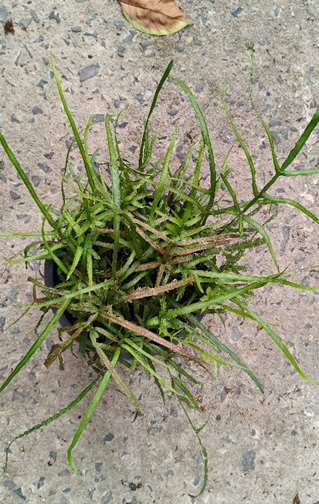
Pteris multifida Poir.
Terrestrial, grown as lithophytes, reported from Hooghly, Howrah, Nadia, and 24-Parganas.
Rhizome short ascending, scaly, fronds dimorphic, thin, sterile frond 10-20cm long, stipes stramineous, lamina bi pinnate, pinnae 2-3 pairs, upper ones decurrent resulting in a winged rachis, on each side, fertile pinna much longer and narrower, sori marginal, continuous along the margin, tetraploid, sexual.
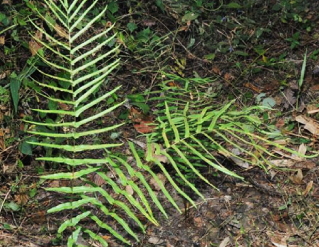
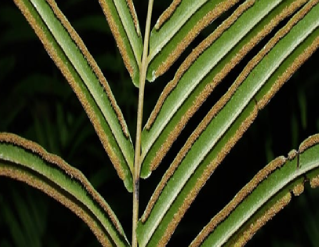
Pteris vittata L.
Terrestrial, lithophyte, common name Chinese brake, found everywhere.
Plant body a few ft in height, rhizome erect, densely covered by scales at apex, scales ovate-lanceolate, thin, membranaceous, entire pale-brown, stipes stout abaxially grooved, pale-brown, clothed with linear, silky, pale-brown scales, lamina simple pinnate with a single, elongate, linear terminal pinna, like the lateral ones, pinnae numerous, opposite or sub opposite, 1-3 cm apart, middle one largest, upper ones slightly reduced, basal ones gradually reduced, upto 6-10 pairs, basal pinnae reduced to deflex auricles, pinnae sessile, linear-lanceolate, acuminate at apex, base broadly cuneate, margin serrate in the distal non-soral part, entire in the rest, texture thin herbaceous, rachis naked or slightly scaly, costae grooved, veins simple forked, sori all along the margin, indusia membranous, spores round, yellowish green.
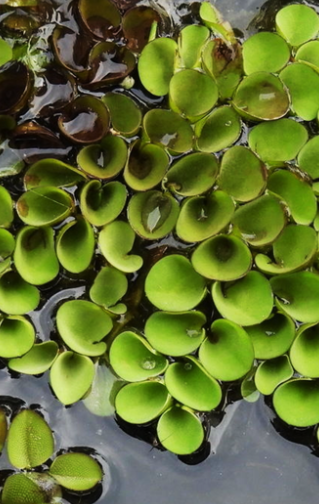
Salvinia cucullata Roxb. ex Bory
Aquatic, floating, found in Nadia.
Floating rootless fern, rhizome slender, thin and branched, leaves are of two types: aerial and submerged leaves present. Aerial leaves are borne in pairs and the submerged leaves grow towards the lower side, submerged leaves are highly branched, and covered with waxy hairs, these hairs trap the air and help the plant to float on the surface, the third leaf functions like a root, aerial leaves with reticulate venation and are covered with hairs with papillose projections. Hairs on submerged leaves are three-celled, reproductive structure is sporocarp, borne in clusters on one of the inner segments of submerged leaf, all sporocarps are similar in appearance but the proximal one or two are megasporangiate whereas the remainders are microsporangiate sporocarps.
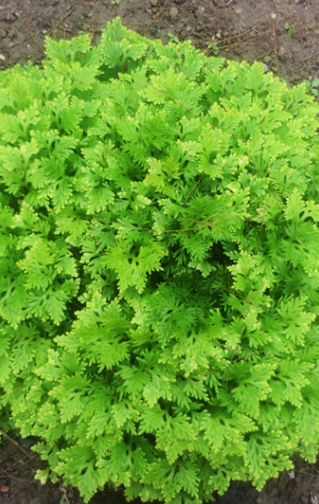
Selaginella plana (Desv.) Hieron.
It is a moisture-loving perennial plant often grown as an upright, bushy ornamental.
Grows more upright and sturdier than most creeping spikemoss species, reaching heights of 6 to 10 inches in pots, with stems that can climb or ascend up to 3 meters in the wild. Foliage: features deep-green, coarse, scale-like leaves arranged in a flat, frond-like pattern resembling cypress tree foliage.
Roots: produces shallow surface roots along the stems
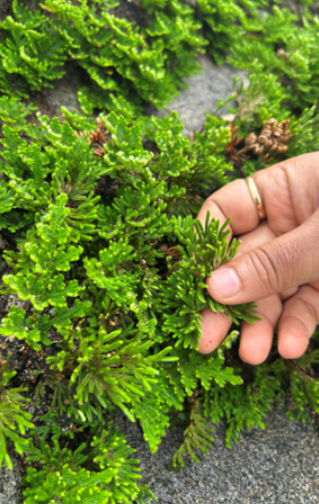
Selaginella bryopteris (L.) Baker
Xerophytic, found in Purulia and Bankura district, West Bengal. During water deficit plant roll like a ball and resume upon splash. Prefer open sunny habitat.
Plant body 2-15cm in height, suberect to erect, roots are very deep (few feet) and tightly bind the soil particles, leaves uniform on the main stem, distant, ovate-lanceolate, denticulate, heteromorphic on the branches, lateral leaves ovate, oblique at the base, midrib short, obscure, strobili rare, single at the apex of the branchlets, sporophylls uniform, entire to minutely denticulate, acuminate
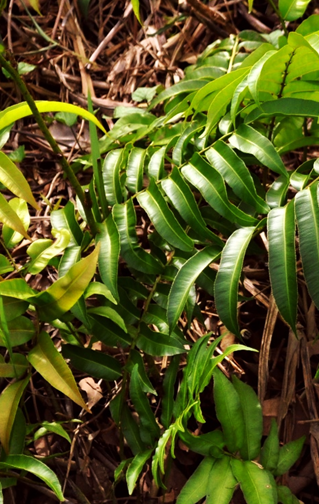
Stenochlaena palustris (Burm.f.) Bedd.
Terrestrial, stem climber, prefers semi shade to shade, swampy forest floor, tolerant to stagnant water conditions, large scandent fern though originating in the swampy floor but it has a rhizome which climbs and twines vigorously surrounding woody vegetations, and the simple pinnate frond grown well above the floor, and the fertile lamina is produced in the exceptionally dry season, distributed in Nadia, Hooghly, Howrah and North 24-Pargana.
Rhizome scandent, sparsely scaly, extensively grown when started climbing, ground form of the stem has adventitious roots and the climbing stem has disc-like aerial roots in addition, lamina dimorphic, when the plant reaches its maximum height it bears fertile fronds, generally the fertile fronds grown in favorable light, vegetative leaves uni pinnately compound, thick leathery in texture, pinna dark green with serrate sharp margin, younger leaves pinkish red, adaxially grooved, abaxially rounded, pinnae alternate or sub-opposite, venation dichotomous, fertile leaves are almost same size of sterile leaves but the lamina contracted, sori densely grown and covered the entire lower surface except the midrib, and the extreme apex, sori deep brown in color.
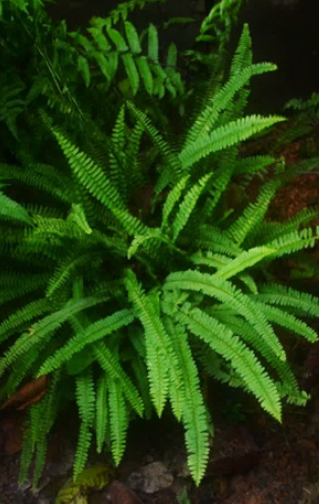
Nephrolepis cordifolia (L.) C.Presl
Terrestrial, luxuriantly grown in garden.
Rhizome short, suberect, about 5 mm in dia, scaly, sparsely scaly, stipe stramineous, scaly at lower portion up to 20 cm long, lamina up to 80 x15 cm, gradually narrowing towards both ends, pinnate, lateral pinnae up to 50 or more pairs, middle ones 1.5-2 cm apart, larger, gradually narrowing from base to apex, falcate, auricled acroscopically, round at basiscopic base, very slightly crenate, thin, glabrous, apex toothed, sori round, indusia reniform.
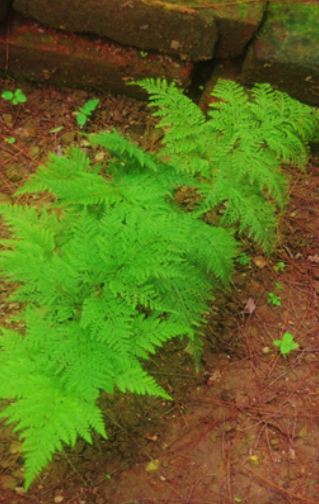
Davallia trichomanoides Hook.
Terrestrial, common name Black rabbit's foot fern.
Rhizome wide creeping, densely hairy, branched, roots thin, few in no., placed distantly, fronds deltoid-pentagonal, tripinnate, suddenly narrowed from second pair of pinnae, tip acuminate, lamina long, pinnae basal pair the largest, pinnules in basal pinnae basal basiscopic the largest, in upper side basal acroscopic is the largest, veins obscure not goes to the margin, sori davalloid, terminal, widest at mouth, indusium with sides attached with lamina-tissue, thick, pale brown.
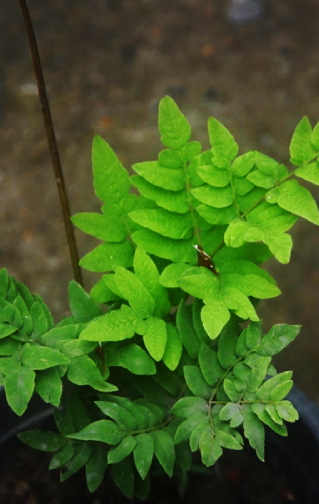
Osmanda regalis L.
Prennial undershrub with partially dimorphic fronds, found in stream banks, damp ravines and rock crevices.
Stems & rhizomes-thick, short, erect or subterranean creeping rhizomes packed with persistent old leaf bases, fronds partially dimorphic where upper portions or distinct fronds become specialized and fertile, densely covered in massive sporangia. Requiring constant moisture, stream-fed banks, or high-humidity tropical and subtropical microclimates.
Acrostichum aureum L.
Known as mangrove associate found in Sundarban area, North 24-pargana, South 24-pargana, Kolkata. Grown in thicket and form small bush covered the entire region. Prefers open habitat.
Rhizome erect, stout stem 4-5 ft height, scales on rhizome and base of the stipe base thickened, frond about 5 ft long, leaves pinnate compound, entire, leathery, pinnae stalked, entire, fleshy, midrib grooved above and strongly raised below, basal few pinnae remain sterile, upper few pinnae pairs of leaves become fertile and undersurface of the leaves covered with reddish sori known as acrostichoid sori. Sporangia borne over the surface on and between the veins, interspersed with short capitate paraphyses, exindusiate.
Adiantum capillus-veneris L.
Born on wall crevices prefer open habitats, form thicket, mostly seen in riverside districts of West Bengal such as Howrah, Hooghly, Nadia, and 24-parganas.
Plant height 10-30cm, rhizome long widely creeping, slender, scales linear-lanceolate, non-clathrate, tip acuminate, smooth-margined and golden brown, stipes black, scaly at the base, adaxially grooved, bipinnately compound leaves, basal pinnules the largest, pinna stalked, lower margin V-shaped, upper ones parallel to the lower one forming a smoothly curved blunt apex, upper margin dentate, venation open dichotomous, sori large, at the intramarginal position covered with the reflexed leaf margin, sporangia small and globular, sexual.
Adiantum lunulatum Burm.f.
Lithophyte, grown in the thicket, sometimes on the forest floor, grown in association with other ferns also. Commonly known as maidenhair fern.
Plants 10-15 cm in length, short creeping rhizome, covered with persistent leaf bases, rhizome and petiole base densely scaly, petiole and rachis black in color, leaves unipinnate, bearing 7-12 alternate pinnae, pinnae lunate, short stalk present, open dichotomous venation, sori linear, confluent or not, intramarginal, false indusium present, leaf margin enrolled to form indusium, sporangia stalked. Apogamous and sexual.
Adiantum raddianum C.Presl
Terrestrial, prefer moist shade mountainous areas.
Rhizome short-creeping, branched, 3-4 mm thick, covered by persistent crowded leaf bases and scales, scales lanceolate, margin entire, tip acicular, golden brown, stipes 15-25 cm long, 1-1.25 cm thick, glabrous, black with scaly base, sparsely hairy above, adaxially grooved, lamina 2-3 pinnate, 30-40 x 15-20 cm, deltoid, pinnules stalked, longer than broad, lower margin almost straight or slightly concave, herbaceous, outer margin smoothly curved with 3-5 sinuses, lower pinnules more or less symmetrical, stalk of the upper pinnules in line with lower margin, distal pinnules more or less acutely triangular with equal inner margins, sori 4-9 on the sinuses of outer margins, 1-3 per lobe, reniform, sporangial stalk as long as capsule, tetraploid, Sexual; triploid, apogamous; octaploid, aneuploid.
Ampelopteris prolifera (Retz.) Copel.
Grown well in both shade and open habitats, form thicket, mostly seen in riverside districts of West Bengal such as Howrah, Hooghly, Nadia, and 24-parganas, in Burdwan and Purulia very rare, helps to prevent soil erosion, may grow in association with other plants or can form thicket in isolated way.
Plant height 10-90cm, rhizome long widely creeping to short creeping depending on the habitat they occupy, slender, scales present, scales linear-lanceolate, smooth-margined and golden brown, stipes black, scaly at the base, uni-pinnately compound leaves, basal pinnules the largest, pinna sessile, acicular hairs on the lamina, rachis also have acicular, glandular and forked hairs, anastomosing veins, connected at the sinus, sori large, roundish, sexual, apical bud present through which it proliferates.
Edible, young croziers are consumed as leafy vegetables or famous in different local cuisine, known as 'dhenki shak' in several hills and plateaus of India.
Ceratopteris thalictroides (L.) Brongn.
Semi-aquatic or marshy, annual plant, grown during rain after forming fertile leaf the aerial stem dies and perishes from the field, but the spores are buried in the soil and maintain a spore bank, from where a new plant body arises. Grow everywhere.
Stems erect, bearing a few scales, and usually few roots, abundant at the petiole base, fleshy, frond dimorphic, sterile frond lanceolate to ovate-lanceolate, shorter than fertile, bipinnate to quadripinnate, fertile fronds narrow, horn-like and rigid, resembling thick-needles, veins anastomosing without included veinlets, sporangia solitary, borne distantly on the veins, indusium well differentiated from the recurved margin. Sexual.
Edible in some places of Bengal, known as Pani-dhenki.
Christella dentata (Forssk.) Brownsey & Jermy(Syn: Thelypteris dentata (Forssk.) E.P.St.John)
Associated well with other plants and also grown in solitary patches. Grown in an open and shady habitat. Very adaptable to disturbance. Grow everywhere.
Plants up to 70cm in height, with short to long creeping rhizomes, rhizome covered with dense scale, stipes scaly at the base, polished, dark-brown when dry, distinct aerophores on either side of the groove, leaf lamina longer than stipe, rachis hairy, lamina pinnatifid, texture herbaceous, basal acroscopic segment enlarged, pinnae about 15-25 pairs below the pinnatifid apex, basal 1-4 pairs gradually reduced and widely spaced, opposite or sub-opposite, lanceolate acuminate at the apex, lobed half way or little more to the costa, lobes 10-20 pairs, rectangular or oblong, rounded-obtuse at the apex, veins up to 8-pairs, free, one and half pairs of basal veins anastomosing to form an excurrent vein reaching the base of the sinus, costa and costule hairy, hair acicular, sori superficial, placed along a specific zigzag fashion along the veins, circular indusium covered the sorus.
Diplazium esculentum (Retz.) Sw.
Prefers moist shady place for growth, grown in association with other weeds, through Gangetic Plains.
Rhizomes ascending, old rhizome very hard erect, rhizome scaly, scales with a wide base, stipes 30-60 cm long, tufted, scaly at the base, scale margin toothed, dark brown, leaves bi-tripinnate with simple pinnate apex, one m or long, and about half as wide, pinnae upto 7 pairs, lower pinnae 40-50 x15 cm, pinnules 5-10 x1-2 cm, lowest shortly stalked and rest sessile, base truncate to broadly cuneate, often auricled on one or both the sides at the base, margins crenate or shallowly lobed, apex acuminate, texture herbaceous, veins pinnate, 6-10 pairs per lobe, the lower 2-3 pairs of adjacent groups anastomosing forming an irregular excurrent vein to the sinus between the lobes, sori linear along the lateral veins and extending along nearly their whole length, basal acroscopic ones diplazoid, with linear membranous indusium, aerial part seen through the year.
Edible, consumed as leafy vegetables.
Drynaria quercifolia (L.) J.Sm.
Epiphytic, seen in very low height (a few feet) of the branches to higher branches (up to 50 ft).
Rhizome creeping, fleshy, covered with dense scales, scale long, base peltate, margin hairy, reddish-brown; lamina dimorphic, sterile leaves small, scaly sessile, obovate to cordate ovate, pale green when young and browny membranous at maturity, fertile leaves deeply pinnatifid, coriaceous, long persistent leaf bases left once the fertile leaves fall, stipes up to 30cm long, grooved above, edges of grooves winged, lamina about 100x40cm, lobes touch the midrib into elongated acuminate segments, base decurrent on the stipes, veins raised above and below, sori at the juncture of veins, cross veins form areole with included veinlets, exindusiate, sporangia stalked, round, spores hyaline. Sexual.
Equisetum ramosissimum Desf.
Terrestrial, lithophytes, grown luxuriantly in a moist microhabitat. Restricted only in Nadia.
Rhizome grown deeper from the surface, aerial stem 20-160 cm tall, 1-7mm dia, 2-3 branches per node, persisting throughout the year, sheath campanulate or funnel-shaped, branches lone slender, ribs 8-20, sheaths tight, 0.5 cm long including lanceolate, acuminate, dark-brown deciduous teeth, strobilus found, terminal in position, yellow to black, obtuse to apiculate, lower sheath brown with dark girdle, upper green rim of sheath white, sporangiophore orbicular to oblong, sporangia oblong, yellowish. Twenty-four ploid, Sexual.
Lygodium japonicum (Thunb.) Sw.
Terrestrial climber, found in Hoogly, Howrah, Nadia, etc.
Rhizome long creeping, covered with black hairs, stipes scaly at base, glabrous above, abaxially flattened, apex acuminate, black, fronds wide-spreading, tripinnate, primary pinnae ca 7-10 cm apart with 2mm long common stalk forked once, primary branches clothed with pale-brown hairs; secondary branches ca 5-12 cm long opposite; pinnae ending in linear, elongated pinnules; pinnules 3-5 lobed, central lobe much elongated, pubescent at base, fertile pinnae much contracted giving an appearance of the dissected lamina, margin of pinnules crenate, texture herbaceous, primary rachis scabrous, secondary rachis ridged, primary blade divide pseudodichotomously with a dormant bud in the axils, veins distinct, 1-3 forked, free, sori finger-like, marginal-projections greenish when young and dark-brown at maturity, sporangia short-stalked, arranged in two-rows, tetraploid, sexual.
Marchantia polymorpha L.
Marchantia polymorpha is a common species of liverwort. It is a small, green, thalloid plant commonly found in moist, shady habitats.
The plant body is a dorsiventral, dichotomously branched thallus with rhizoids on its lower surface. It bears distinctive gemma cups, which help in asexual reproduction. Male and female reproductive structures occur on specialized stalks called antheridiophores and archegoniophores, respectively. The dominant and independent phase is the gametophyte, while the sporophyte remains attached to it.
Marchantia reproduces by vegetative, sexual, and asexual methods. Because of its simple structure and well-defined life cycle, Marchantia polymorpha is now been used as model plant of present-day researchers.
Marsilea minuta L.
Rooted aquatics, land and water form is seen, leaves of water form are much larger than the land forms. Very common to see these plants in the water bodies of West Bengal.
Slender creeping dichotomously branched rhizome of indefinite growth, nodes are distantly placed, at each node bear one or two adventitious roots and an upright leaf, Quadrifoliate leaves, leaflets entire or crenulate, at night the leaflets are folded upwards assuming a 'sleeping' position, profuse growth seen in vegetative stage, reproductive structure sporocarp bears both micro and megasporangia, sporocarp is a flattened bean-shaped structure borne on the base of the petiole. Sporocarp remains viable up to 35-40 yrs.
Microlepia speluncae (L.) T. Moore
Microlepia speluncae is a large, terrestrial perennial fern. It features soft, delicate fronds that often go limp soon after being picked, and it is widely distributed across wet tropical and subtropical regions. Thrives in moist, shaded conditions in evergreen forests, swamp forests, marshes, and damp shaded ravines.
Rhizome short or widely creeping, fleshy, 5-10 mm in diameter, and covered with pale or brownish hairs, stipe chestnut-brown to straw-colored, growing up to 1 meter long, and finely hairy near the base and apex, lamina (blade): broadly ovate to triangular, 0.4 to 2.6 meters long, and 3- to 4-pinnate, fronds yellow-green to green, membranous, with soft, minute hairs on both surfaces, sori: circular, about 1 mm wide, located at the vein ends near the margin, featuring a cup-shaped or saucer-shaped outward-facing indusium.
Microsorum punctatum (L.) Copel.
Epiphyte, seen in different tree heights, netted roots form a weblike structure containing organic debris, minerals, and water and provide a suitable microniche to the plant, found everywhere.
Rhizome short creeping, ca 1 cm thick, stout, ovate or ovate-lanceolate, acuminate, margin toothed, peltate, blackish-brown, each node bears a tuft of adventitious roots and a single leaf at the upper side, leaf simple, sessile, lanceolate or elliptic, apex blunt or acute, base decurrent, margin entire, midrib rounded below, grooved above, reticulate venation, veins visible but not prominent, form areole which includes small free forked veinlets with clavate apices, texture coriaceous, leaf lamina glabrous, sori numerous small round, irregularly scattered on the upper half of the frond, sporangia oval, short-stalked, diploid, sexual, tetraploid.
Ophioglossum petiolatum Hook.
Terrestrial, grown in swampy areas, found in Hooghly and Nadia
Plant height 10-15 cm, rhizome short erect, slender having many fleshy roots, fronds one or more arising during a single growing season, stipe common, 2-8 cm long but shorter than the fertile stipes, trophophyll sessile, ovate or ovate-lanceolate, base obtuse, veins forming large areoles with free included veinlets, fertile spike longer than the common stipe, strobilus/spike 1-4 cm long, aneuploid.
Phymatosorus lucidus (Roxb.) Pic.Serm.
Terrestrial, profusely grown in shorter periods.
Roots adventitious, hairy, rhizome long creeping, thick about 2cm in dia, densely covered by scales, scales linear-lanceolate, apex hair-tipped, acute spreading, stipes erect slender, hairy, pale-purplish, glossy, lamina simple pinnate, deltoid to ovate-lanceolate, with a terminal pinna similar to lateral ones, pinna numerous, lower ones opposite, the rest alternate, lower pinnae sessile or shortly stalked, superior ones more or less adnate or decurrent at the base, the lowest pair of pinnae reduced, largest pinnae oblanceolate, apex short acuminate, base subtruncate or cuneate, costa distinctly raised above and below, veins prominent, forming a large areole with included veinlets which bear sori, marginal veins ending in a thickened apex within the margin and free, texture firm, membranous, lamina pale-greenish, sori globose, small, superficial, at the tip of free veinlets in the costal areoles, light brown.
Polytrichum commune Hedw.
Commonly known as haircap moss or giant haircap moss, is a medium to large-sized perennial moss that forms extensive, tough green-to-brown tufts or mats. Thrives in damp, acidic soils, peat bogs, wet heaths, open woodlands, and forest water courses.
A cosmopolitan species found worldwide across diverse climates and regions.
Tufted plants with usually much branched tall stems, 10-20 cm height, brownish thickly covered with stiff erectopatent leaves (except the base), leaves linear-lanceolate upto 6-12 mm long with sharp toothed margins, wider sheathing base, upper leaf surfaces feature parallel photosynthetic ridges (lamellae) that help trap moisture and protect the plant, angular capsules sitting on a long, reddish stalk (seta), covered by a distinctive, hairy, whitish-to-brown hood (calyptra).
Psilotum nudum (L.) P.Beauv.
Epiphyte and terrestrial both
Plant height 20-25 cm, very simple body organization having a subterranean rhizome, dichotomously branched aerial axis, and numerous rhizoids at the underside, non-septate hyaline rhizoids, plant body lack roots, rhizoids act as absorptive organ, leaves absent, on aerial branches awl-shaped small appendages are present which are without any vascular trace and stomata, ultimate aerial branches bear large conspicuous sporangium, that is a trilocular structure and called also synangium, synangium inverted pear-shaped, subtended by two spine like enations.
Pteris biaurita L.
Terrestrial, grown in shade as well as sun, grown in association with other plants, sometime form small thickets, reported from Hooghly.
Rhizome erect to suberect, scaly, scale at the apex, scales ovate-lanceolate, acuminate, entire, dark-brown, concolorous, stipe glabrous, scale near the base, 10-60 cm long, grooved on adaxial surface, lamina deeply bipinnatifid, herbaceous, lowest pinnae longest and bipartite on basicopic side, shortly stalked, rest of the pinnae sessile, pinnae opposite to subopposite, lanceolate, apex acuminate, base broadly cuneate, margin sharply spinulose, serrate, fertile lamina much longer than the sterile ones, pinnae similar those of sterile ones, but somewhat narrower and margin entire, rachis glabrous, pinnae dark green, veins parallel, simple or forked once, free, basal opposite pairs of veins anastomose to form costal areoles along either side of the costa, with subsidiary veins ascending to the margin near the base of the sinus, sori linear all along the margin except at the base or apex, triploid, apogamous.
Pteris multifida Poir.
Terrestrial, grown as lithophytes, reported from Hooghly, Howrah, Nadia, and 24-Parganas.
Rhizome short ascending, scaly, fronds dimorphic, thin, sterile frond 10-20cm long, stipes stramineous, lamina bi pinnate, pinnae 2-3 pairs, upper ones decurrent resulting in a winged rachis, on each side, fertile pinna much longer and narrower, sori marginal, continuous along the margin, tetraploid, sexual.
Pteris vittata L.
Terrestrial, lithophyte, common name Chinese brake, found everywhere.
Plant body a few ft in height, rhizome erect, densely covered by scales at apex, scales ovate-lanceolate, thin, membranaceous, entire pale-brown, stipes stout abaxially grooved, pale-brown, clothed with linear, silky, pale-brown scales, lamina simple pinnate with a single, elongate, linear terminal pinna, like the lateral ones, pinnae numerous, opposite or sub opposite, 1-3 cm apart, middle one largest, upper ones slightly reduced, basal ones gradually reduced, upto 6-10 pairs, basal pinnae reduced to deflex auricles, pinnae sessile, linear-lanceolate, acuminate at apex, base broadly cuneate, margin serrate in the distal non-soral part, entire in the rest, texture thin herbaceous, rachis naked or slightly scaly, costae grooved, veins simple forked, sori all along the margin, indusia membranous, spores round, yellowish green.
Salvinia cucullata Roxb. ex Bory
Aquatic, floating, found in Nadia.
Floating rootless fern, rhizome slender, thin and branched, leaves are of two types: aerial and submerged leaves present. Aerial leaves are borne in pairs and the submerged leaves grow towards the lower side, submerged leaves are highly branched, and covered with waxy hairs, these hairs trap the air and help the plant to float on the surface, the third leaf functions like a root, aerial leaves with reticulate venation and are covered with hairs with papillose projections. Hairs on submerged leaves are three-celled, reproductive structure is sporocarp, borne in clusters on one of the inner segments of submerged leaf, all sporocarps are similar in appearance but the proximal one or two are megasporangiate whereas the remainders are microsporangiate sporocarps.
Selaginella plana (Desv.) Hieron.
It is a moisture-loving perennial plant often grown as an upright, bushy ornamental.
Grows more upright and sturdier than most creeping spikemoss species, reaching heights of 6 to 10 inches in pots, with stems that can climb or ascend up to 3 meters in the wild. Foliage: features deep-green, coarse, scale-like leaves arranged in a flat, frond-like pattern resembling cypress tree foliage.
Roots: produces shallow surface roots along the stems
Selaginella bryopteris (L.) Baker
Xerophytic, found in Purulia and Bankura district, West Bengal. During water deficit plant roll like a ball and resume upon splash. Prefer open sunny habitat.
Plant body 2-15cm in height, suberect to erect, roots are very deep (few feet) and tightly bind the soil particles, leaves uniform on the main stem, distant, ovate-lanceolate, denticulate, heteromorphic on the branches, lateral leaves ovate, oblique at the base, midrib short, obscure, strobili rare, single at the apex of the branchlets, sporophylls uniform, entire to minutely denticulate, acuminate
Stenochlaena palustris (Burm.f.) Bedd.
Terrestrial, stem climber, prefers semi shade to shade, swampy forest floor, tolerant to stagnant water conditions, large scandent fern though originating in the swampy floor but it has a rhizome which climbs and twines vigorously surrounding woody vegetations, and the simple pinnate frond grown well above the floor, and the fertile lamina is produced in the exceptionally dry season, distributed in Nadia, Hooghly, Howrah and North 24-Pargana.
Rhizome scandent, sparsely scaly, extensively grown when started climbing, ground form of the stem has adventitious roots and the climbing stem has disc-like aerial roots in addition, lamina dimorphic, when the plant reaches its maximum height it bears fertile fronds, generally the fertile fronds grown in favorable light, vegetative leaves uni pinnately compound, thick leathery in texture, pinna dark green with serrate sharp margin, younger leaves pinkish red, adaxially grooved, abaxially rounded, pinnae alternate or sub-opposite, venation dichotomous, fertile leaves are almost same size of sterile leaves but the lamina contracted, sori densely grown and covered the entire lower surface except the midrib, and the extreme apex, sori deep brown in color.
Nephrolepis cordifolia (L.) C.Presl
Terrestrial, luxuriantly grown in garden.
Rhizome short, suberect, about 5 mm in dia, scaly, sparsely scaly, stipe stramineous, scaly at lower portion up to 20 cm long, lamina up to 80 x15 cm, gradually narrowing towards both ends, pinnate, lateral pinnae up to 50 or more pairs, middle ones 1.5-2 cm apart, larger, gradually narrowing from base to apex, falcate, auricled acroscopically, round at basiscopic base, very slightly crenate, thin, glabrous, apex toothed, sori round, indusia reniform.
Davallia trichomanoides Hook.
Terrestrial, common name Black rabbit's foot fern.
Rhizome wide creeping, densely hairy, branched, roots thin, few in no., placed distantly, fronds deltoid-pentagonal, tripinnate, suddenly narrowed from second pair of pinnae, tip acuminate, lamina long, pinnae basal pair the largest, pinnules in basal pinnae basal basiscopic the largest, in upper side basal acroscopic is the largest, veins obscure not goes to the margin, sori davalloid, terminal, widest at mouth, indusium with sides attached with lamina-tissue, thick, pale brown.
Osmanda regalis L.
Prennial undershrub with partially dimorphic fronds, found in stream banks, damp ravines and rock crevices.
Stems & rhizomes-thick, short, erect or subterranean creeping rhizomes packed with persistent old leaf bases, fronds partially dimorphic where upper portions or distinct fronds become specialized and fertile, densely covered in massive sporangia. Requiring constant moisture, stream-fed banks, or high-humidity tropical and subtropical microclimates.
Apart from these bryophytes and pteridophytes, some mosses are present in our collection. Identification is ongoing for those collections of Eastern Himalaya. Gymnosperm like Sago palm, pencil pine, golden pine, blue pine, Christmus tree are present in this garden. Along with Trema orientale, Sterculia alata, Mallotus nudiflorus, Premna latifolia, Ficus rumphii, Albizzia lebbeck, Cordia myxa like large trees are present.
Message from the desk of PI
It gives me immense pleasure to disseminate this message to the visitors of this e-content; to let you know about our Fern Haven:Whispers of the Silurian, a carefully designed living collection created to celebrate the diversity, beauty, and ecological significance of ferns.
The garden has been developed as a space where nature, education, and research come together. It showcases a diverse range of fern species and provides an opportunity to appreciate their unique forms, adaptations, and role in natural ecosystems. Beyond its aesthetic value, the garden serves as a living resource for students, researchers, and visitors, encouraging observation, learning, and further exploration of fern biology and conservation.
Through this initiative, I hope to foster greater awareness of plant diversity and inspire an appreciation for the often-overlooked beauty of these ancient and fascinating plants. I hope this garden will continue to grow as a center for learning, research, conservation, and engagement with nature.
I warmly welcome you to explore the Fern Garden and discover the remarkable world of ferns.

Acknowledgement note:
The description of the plants shared herewith are adapted from the book "Exploring the Local Ferns and Cultivated Varieties of West Bengal (Excluding the Himalayan Range)"by Dr Kakali Sen. Readers are referred to consult the book for elaborate information of the plant.